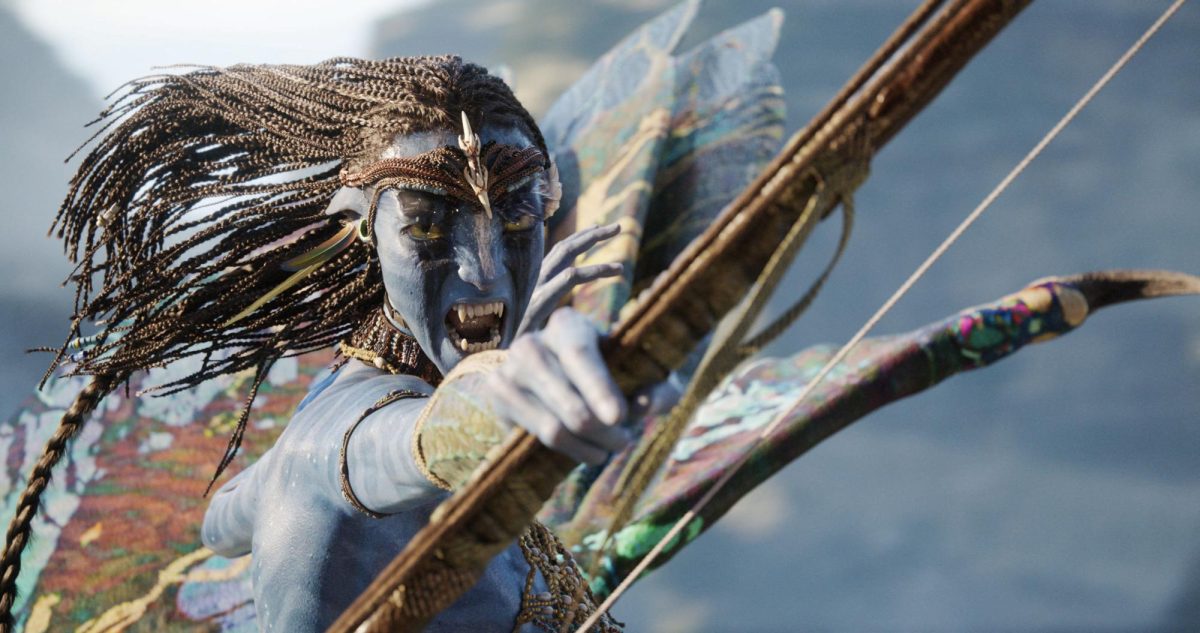
After two years in the making, the third entry in James Cameron’s Avatar series continues to transport audiences back to Pandora with his immersive cinematography.
“Avatar: Fire and Ash” continues to follow the Sully family, who are now dealing with the death of Neteyam. Through the grief, they continue to adapt the Metkayina lifestyle with the necessity of modernization in the threat of the RDA. Cameron also expands the world of Pandora, introducing the Mangkwan clan. The clan, unlike most other clans, rejects the spiritual values of the Na’vi and works with the RDA against them.
Cameron opens up different perspectives of the characters, creating protagonists who have sides to love and hate. Throughout the second and third movies, Jake blames Lo’ak for Neteyam’s death, making Lo’ak believe that it was his fault. Cameron also creates reason to sympathize with the antagonists. Varang, the leader of the Mangkwan, tells how their village burned down even after asking Eywa to help, saying how she turned her back on them. Letting the audience in on the backgrounds of the various characters creates an emotional conflict that gives the characters a more human feel.
The visuals in “Fire and Ash” have continued to be stunning from the last, transporting viewers into the oceans and forests of Pandora and introducing the Mangkwan village, now an eerie memory of what used to be lush forest. These visuals continue to contribute to the story, giving the audience an experience of being in these places.
At three hours long, it can feel drawn out at points, but the story and its awe-inspiring visuals continue to grab attention. “Avatar: Fire and Ash” is a must-see movie that covers the ups and downs within a family and continues to have an underlying nature-centered message.