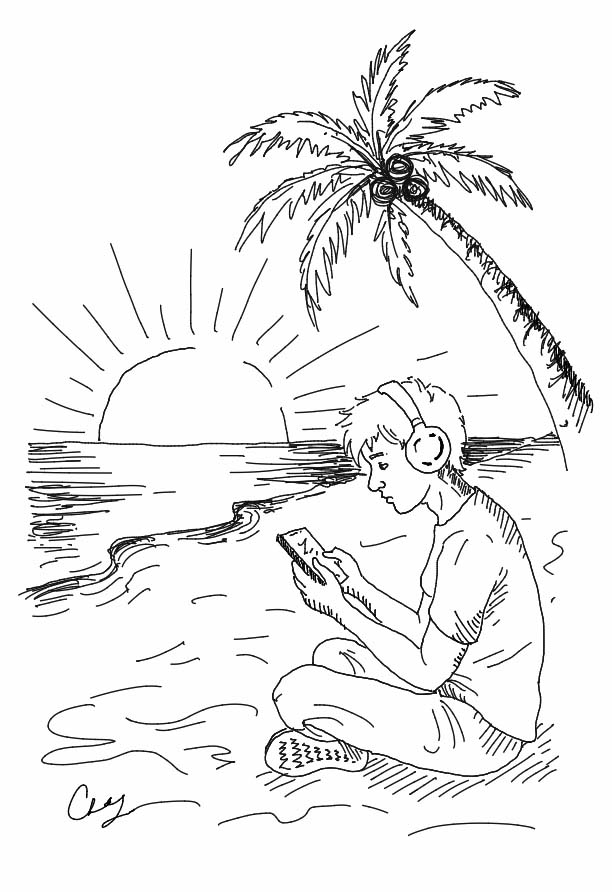
Throughout high school, we experience many of our firsts. For some of us, it is getting into a meaningful relationship. For others, it is getting a part-time job. It might be attending a dance for the first time. Yet, we are also given expectations of what to do and what not to do throughout these four years. One of those expectations is letting go.
When we get a bad grade, we are expected to let go of the disappointment and move on. When a friendship turns sour, we are expected to focus on our remaining friendships and let go of the past. When we lose someone in our lives who made up our daily routine, we are expected to grieve and let go of that grief eventually. However, there is value in learning to live without letting go.
Imagine all of the books you have read. You have likely forgotten more books than you remember. At the same time, you have not let go of every book you have read. The words you read influence your life in subtle ways. Now, imagine if your life were a collection of books. The philosopher John Locke argued that our very identity is built on our memory; we are the sum of our past experiences. Your past mistakes, your embarrassing phases, the naive texts you once sent, and your old friendships are the books on your shelf. You do not need to live within these books, but that does not mean you should burn them either. Even if you burn these books, this collection is fundamental to who you are today.
We all have our haunting memories. Over time, we might feel guilty for still being sad or missing something. How could we miss a past relationship where we felt hurt, or how could we miss a relationship that we ruined? How could we miss a past part of ourselves that is different from who we are today? The guilt we experience might make us feel like we are stuck. However, this “stuckness” is actually a sign of respect for the connection that we once had. The philosopher Jacques Derrida believed that we have a “duty” to keep the things we have lost alive within us. No one except you can understand the depth of those late-night texts, how flustered they made you feel, or the stability of that person’s presence in your life. Likewise, no one should take that connection from you simply because you are expected to move on.
We assign sentimental value to certain things. These can be voicemails from someone we can no longer talk to, harsh words that ended a relationship, or handwritten letters from the beginning of a relationship. These memories might bring profound sadness, and it is okay to let them be a part of our lives because they prove the connection was real. Our refusal to let go prevents our emotional world from being “flat.” Marcel Proust, a thinker who obsessed over the power of memory, suggested that the past gives our lives depth and color. If letting go leads to numbing or a facade of peace, then it might not be worth it.
Letting go is your choice. There is a difference between ruminating and incorporating memories into your life. Being stuck in the past, constantly replaying moments, might leave you unsatisfied. But carrying the love of past relationships that we once had into the present builds emotional resilience, and it sets a foundation for who we ultimately are in a changing future. We can read millions of words on how to move on. We can try to reason our way out of our emotions. We do not move away from the past; we move forward with it.
When you cut a kite from its string, it will fly momentarily and then come crashing down. Holding on—maintaining that string to where you have been—is what allows us to reach for the future without losing who we are.